MENU
IMPACT CALCULATOR
Request Demo
Industries

Supply Chain Planning
Software for Life Sciences

AI-Native Supply Chain Planning Software
for Life Sciences

From demand shifts and material shortages to shelf-life, cold-chain, capacity and compliance constraints, every decision in a life sciences supply chain affects the next.

ICRON AI-native decision execution hub enables pharmaceutical, biotechnology and medical device companies to turn complex planning decisions into coordinated, executable action by considering material availability, equipment and labor capacity, supplier dependencies, shelf-life requirements, cold-chain conditions, regulatory obligations and changing demand together.

By combining advanced optimization, governed AI and embedded life sciences decision logic, ICRON enables teams to compare scenarios, understand trade-offs and respond to disruption with greater speed and control. This helps protect product availability, service, quality, efficiency and resilience.

Lab analyst examining samples under a microscope

Supply Chain Planning Built for Life Sciences

Life sciences manufacturers must keep critical products moving while coordinating equipment, people, materials, inventory, capacity and production under demanding quality and regulatory requirements.

At the same time, pharmaceutical, biotechnology and medical device companies must improve patient and customer access, manage cost and inventory, and respond to changing demand without destabilizing supply.

ICRON connects planning across demand, supply, inventory, production, procurement and distribution within one AI-native environment. This gives teams greater visibility into how decisions affect the wider supply chain and helps them maintain continuity and control as conditions change.

ICRON helps life sciences organizations:

  • Maintain the continuous supply of critical products under volatile demand

  • Synchronize production with equipment, labor, capacity and maintenance requirements

  • Replan rapidly when supply, demand or operational conditions change

  • Reduce changeovers, production losses and material waste

  • Maintain service levels while controlling inventory and cost

  • Protect product availability despite shelf-life limits and cold-chain requirements

ICRON is a Major Player

IDC MarketScape: Worldwide Supply Chain Planning for Life Sciences
Industries Vendor Assessment

Click to Learn More

Supply Chain for Pharmaceutical, Biotech and Medical Device
Manufacturer

Pharmaceuticals

Key challenges: meeting regulatory requirements that differ by market, managing shelf life and expiry, positioning inventory across distribution tiers, and planning the shift from clinical to commercial supply.

How ICRON helps: ICRON gives pharmaceutical teams AI-driven scenario management that improves control over product availability and lifecycle performance. By coordinating decisions across sourcing, production and distribution, teams can strengthen launch readiness for new products while sustaining steady supply of existing therapies. Inventory is managed on a FEFO (First Expiry, First Out) basis, which raises availability, cuts waste and keeps operations reliable as regulations and demand shift.

Get The Brochure

Biotechnology

Key challenges: multi-stage manufacturing, bioreactor cycles with extensive QA checks, variable yields and feasibility risk, shelf life and expiry, inventory positioning, the clinical-to-commercial shift, and regulatory requirements that differ by market.

How ICRON helps: Biotech production depends on scarce, specialized capacity, so ICRON synchronizes bioreactor cycles, production readiness and release timing as conditions change, keeping output steady and expensive assets well utilized. With full visibility across materials, capacity and quality checks, teams can make confident release and scheduling decisions and protect continuity of supply from R&D through to market.

Medical Device Manufacturing

Key challenges: regulatory requirements that differ by market, managing product lifecycle, handling contract manufacturing and supplier dependence, and planning for service continuity and the installed base.

How ICRON helps: MedTech supply is shaped by long product lifecycles and a growing installed base, so ICRON plans production, supply and lifecycle demand together, factoring in product configurations, supplier capability and installed equipment volumes to keep production stable and supply predictable. Scenario views of demand growth, product transitions and sourcing options help teams stay responsive and keep delivery reliable across distributed networks.

Life Sciences Supply Chain Planning in Practice

ICRON helps life sciences organizations execute planning decisions reliably under real regulatory and operational constraints,
from network design and inventory optimization to capacity planning and risk mitigation.

Customer Stories

Customer story, global pharmaceutical leader: building resilience amid risk and complexity

A multinational pharmaceutical manufacturer faced long production lead times, stringent regulatory requirements, and unpredictable demand for new products. Using ICRON supply chain network design and multi-echelon inventory optimization, the company aligned long-term capacity planning with mid-term optimization, integrated external contract manufacturers to reduce supply-side risk, and used what-if scenario analysis to respond to disruption with greater flexibility, strengthening resilience across a complex, highly regulated supply chain.

Read the Customer Story
Webinar

Webinar: How Bayer shapes innovative supply chain planning with AI

In this session with BizClik, Bayer discusses how it applies ICRON to align planning decisions across the supply chain and build a more resilient, responsive planning process.

Watch The Webinar

Core Planning Decisions in Life Sciences Operations

Effective planning in life sciences depends on making coordinated decisions across development, manufacturing, inventory, and distribution, all under compliance and shelf-life pressure. ICRON supports planners in answering critical operational questions such as:

By modeling these decisions together, ICRON keeps plans feasible, synchronized, and operationally reliable from R&D through commercialization.

Planning Challenges in Life Sciences Supply Chains

Pharmaceutical, biotech, and medical device operations face a distinct combination of regulatory, production, and logistics constraints that planning systems must account for simultaneously to produce executable plans.

01

Regulatory and Compliance Constraints

Plans must stay aligned with strict regulatory requirements and remain audit-ready at every stage of development, manufacturing, and distribution.

02

Shelf-Life and Expiry Management

Products with limited shelf lives, including biologics and temperature-sensitive therapies, require expiry-aware inventory planning that maximizes availability while minimizing waste.

03

Cold Chain and Temperature-Sensitive Logistics

Cold chain preservation of biologics and sensitive materials must be synchronized across multiple tiers without compromising quality.

04

Demand Volatility and Patient Access

Demand shifts quickly, yet patient access to critical products cannot be interrupted.

05

Long Lead Times and Supplier Limitations

Extended lead times, single-source components, and supplier constraints make timing and allocation decisions high-stakes.

06

CMO / CDMO Coordination

Internal operations and external contract manufacturers must share a single view of timelines, capacity, and materials.

07

Scarce Component and Capacity Allocation

Limited APIs, components, and equipment capacity must be allocated across plants and projects to avoid bottlenecks.

How ICRON Supports Life Sciences Operations

ICRON coordinates planning decisions across R&D, production, inventory, procurement, and distribution within a single optimization environment, so decisions made in one area stay consistent with operational realities in others.

A quality control worker marks inventory boxes to support multi-echelon inventory optimization.

Multi-Echelon Inventory Optimization

Multi-echelon inventory optimization manages inventory at every level of the supply chain, from cold chain preservation of biologics to just-in-time component availability for precision equipment, synchronizing supply across tiers to avoid shortage or excess and maintain service continuity without compromising quality or compliance.

A production worker in a pharmaceutical facility supports batch production scheduling.

Batch Production Scheduling

Schedule individual batches across constrained equipment, materials, labor, and capacity, generating feasible schedules that respect changeovers, maintenance windows, and resource readiness.

A warehouse worker reviews campaign planning data through an analytics overlay.

Campaign Planning & Scheduling

Group and sequence related batches into campaigns to reduce cleaning, changeovers, and setup losses, while maximizing batch campaign throughput and equipment utilization.

Plant teams evaluate capacity and resource planning across a connected production facility.

Capacity And Resource Planning

Evaluate production capacity, labor, and equipment constraints simultaneously so plans remain achievable across internal sites and contract manufacturers.

Warehouse partners coordinate CMO and CDMO production planning across contract manufacturing sites.

CMO / CDMO Production Planning

Plan multi-client orders, materials, capacity, and production across contract manufacturing, unifying internal operations with external partners in a shared view of timelines, capacity, and materials.

A quality analyst inspects equipment to support compliance and regulatory alignment.

Compliance And Regulatory Alignment

Keep every component reaching the right place at the right time, with plans that respect lead-time constraints and supplier limitations and stay audit-ready.

A cross-functional team aligns on sales and operations planning on the production floor.

Sales And Operations Planning (S&OP)

Aligns demand, production, inventory, and supply within one framework, keeping plans feasible against capacity, shelf-life, and regulatory constraints.

A planner reviews scenario-based planning dashboards on a laptop.

Scenario-Based Planning

Evaluate alternative production, sourcing, or inventory strategies to understand operational and compliance impact before implementing changes.
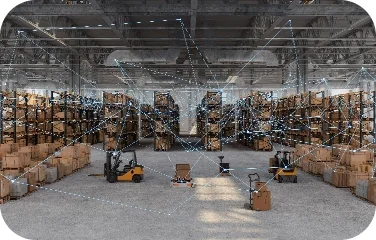
A connected warehouse network illustrates supply chain network design across distribution nodes.

Supply Chain Network Design

Configure the supply chain network design strategically for optimal performance and resilience, supporting long-term decisions about production, storage, and cold chain logistics.

AI-Native Decision Execution for Life Sciences Supply Chains

In life sciences, plans have to hold up when they meet real operations.

ICRON connects planning with governed execution, helping teams turn approved decisions into coordinated action across the supply chain. Decisions are evaluated against operational constraints, business rules, risk, regulatory requirements and life sciences-specific logic so that recommended actions remain feasible under real conditions.

When demand, supply or production conditions change, advanced optimization helps teams evaluate alternative responses and adjust the course of action while maintaining visibility, traceability and control. Approval, override and escalation remain available wherever human involvement is required.

Execution outcomes, exceptions and changing constraints can then feed back into the next decision cycle, creating a continuous connection between planning, execution and improvement.

Powered by ICRON AI-Native Decision Execution Hub, this approach combines trusted decision-making, optimization-led execution and governed AI to help life sciences teams move from better plans to better-executed decisions.

AI-native decision execution overlay on a life sciences lab, connecting planning data to test tubes and equipment

Life Sciences Supply Chain Planning FAQ

Business Value & Outcomes

1. Why is supply chain planning critical in the life sciences industry?

Patient access depends on the reliable availability of medicines, biologics and medical devices. Planning coordinates demand, materials, capacity, inventory and distribution while managing shelf life, cold-chain requirements, long lead times and strict regulatory obligations — constraints that, mishandled, translate directly into shortages or waste.

2. What business outcomes can life sciences companies expect from advanced planning?

Typical gains include higher product availability and service levels, better capacity and equipment utilization, and faster response to disruption. These come alongside lower inventory, reduced expiry and waste, and stronger cost control across regulated manufacturing and distribution networks.

3. How does integrated planning change day-to-day decision-making?

Because demand, supply, inventory, production, procurement and distribution sit in one environment, a planner can see how a single decision ripples into capacity, materials, service, cost and compliance elsewhere — turning isolated trade-offs into coordinated choices rather than downstream surprises.

4. How does expiry-aware inventory planning reduce waste in practice?

It weighs remaining shelf life, demand, lead times, storage conditions and stock location when deciding where product should be held or used, prioritizing stock on FEFO principles. The effect is fewer write-offs and less excess without starving any market of supply.

Fundamentals & Core Concepts

5. What is life sciences supply chain planning?

It is the coordination of demand, supply, inventory, production, procurement and distribution across pharmaceutical, biotech and medical device operations — accounting for shelf life, cold-chain conditions, quality controls, limited capacity, supplier dependencies and patient-service obligations.

6. What should I look for in pharmaceutical supply chain planning software?

Beyond core materials, inventory, capacity, sourcing and distribution planning, look for how well it handles the industry's edge cases: expiry and batch production, long lead times, new-product launches, external manufacturers and market-specific regulatory requirements — while keeping plans executable.

7. When does shelf life actually drive the plan, versus just constrain it?

Shelf life stops being a checkbox and starts steering decisions when it dictates how much to produce, where to position it, and which demand it can serve. Short-dated biologics, for example, force production and distribution timing to be planned backward from expiry rather than forward from capacity.

8. What makes cold-chain inventory planning harder than ambient?

Temperature-controlled capacity is finite and expensive, transit adds risk, and usable life erodes with every handling step. Planning has to reconcile that limited cold capacity with regional demand and shelf life simultaneously, rather than treating storage as unconstrained.

Production, Scheduling & Operational Planning

9. How does multi-echelon inventory optimization decide where stock sits?

It looks across tiers at once — plants, distribution centers and markets — and balances service targets against demand uncertainty, lead times, shelf life, supply risk and cost, rather than setting safety stock tier by tier in isolation. The result is availability without redundant buffers.

10. What does batch production scheduling handle that a generic scheduler won't?

It assigns batches to equipment, materials, labor and time windows under real process rules — changeovers, cleaning, maintenance, validated sequences and quality holds — so the schedule it produces is one the plant can actually run, not just a theoretically level-loaded one.

11. When is campaign planning worth the loss of flexibility?

Grouping compatible products into campaigns pays off when cleaning, setup and changeover losses are high relative to run length. Sequencing related batches together recovers that lost time as throughput and utilization — the trade-off being less freedom to reorder mid-campaign.

12. How does capacity planning support investment and sourcing calls?

By matching future demand against equipment, labor, lines, suppliers and external capacity, it surfaces where bottlenecks will appear before they bite — informing whether to add capacity, qualify a supplier or shift volume to a contract manufacturer.

13. How does scheduling stay valid under GxP and validated changeovers?

The scheduling model carries the constraints as first-class inputs: approved processes, equipment qualifications, cleaning rules, production sequences and quality controls sit alongside capacity, materials, labor and maintenance, so a proposed schedule is feasible and compliant rather than feasible on paper only.

AI-Native Decision Execution & Advanced Capabilities

14. Where does AI actually add value in life sciences planning?

AI accelerates the analysis of changing demand, supply risk, capacity limits and operational dependencies. Paired with advanced optimization, governed workflows and embedded industry logic, it supports scenario comparison, faster replanning and coordinated execution — while keeping people in the loop where judgment and accountability matter.

15. What questions does scenario-based planning let me answer?

It lets teams test alternative demand, sourcing, inventory, capacity and production decisions before acting — showing how a supplier disruption, plant downtime, launch uncertainty or demand surge would hit service, cost, compliance, inventory and feasibility.

16. What separates decision execution from planning?

Planning produces a recommendation; execution turns it into coordinated operational action. In life sciences that means the decision has to reflect materials, capacity, business rules, quality and regulatory requirements and current conditions, so it stays feasible when it moves from analysis into production and supply.

17. How does AI-native execution build resilience specifically?

It reassesses demand, sourcing, inventory, capacity and production as conditions change, compares feasible responses and moves selected actions into coordinated execution — with customer-defined policies, traceability and human oversight letting teams increase autonomy without losing control.

Data, Integration & Scalability

18. How does ICRON integrate with ERP and SAP systems?

It uses existing master data, inventory, orders, capacity, production and procurement information as planning inputs, working alongside operational systems and returning coordinated plans or decisions for execution through established business processes — so it augments the system of record rather than replacing it.

Resources for Life Sciences Operations

Demand Decision Process

ICRON Demand empowers businesses to navigate uncertainty through accurate forecasting using AI-driven methods that take into consideration historical data, real-time updates, and fast adaptation to changing market conditions and disruptions.

READ MORE