MENU
Request Demo
Customer Centric Supply Chain Planning

Production Scheduling Software for Complex Manufacturing Operations

What is Production Scheduling Software?

Production scheduling software defines how manufacturing orders are sequenced and assigned to machines, labor, and materials over time under real operational constraints. By explicitly modeling finite capacity, material availability, setup rules, and delivery commitments, production scheduling ensures that shop-floor execution plans are feasible, synchronized, and responsive to change.

ICRON Production Scheduling (Detailed Scheduling) sequences and assigns production tasks with precision down to the minute, enabling faster production flow and fewer delays. Managers gain real-time visibility and total control over the shop floor, allowing them to make informed decisions when disruptions, priority changes, or capacity constraints arise.

How ICRON Production Scheduling Works

ICRON Production Scheduling is included in Gartner’s Market Guide for Detailed Manufacturing Scheduling, which examines solutions for execution-level sequencing, finite capacity modeling, and real-time schedule adjustment.

As noted by industry analysts, manufacturers increasingly require execution-level scheduling capabilities that connect planning decisions with shop-floor execution. ICRON addresses this need through minute-level sequencing, real-time Gantt visibility, and automated resequencing under disruption.

  • Sequence and assign tasks under real constraints

    Production orders are sequenced and assigned to resources based on finite machine capacity, labor availability, material constraints, setup rules, and delivery priorities. Scheduling decisions are feasible by design, not adjusted after the fact.

  • Minute-level scheduling with interactive control

    Schedules are generated with time granularity down to the minute and visualized through an interactive Gantt chart. Planners can adjust sequences directly while the system continuously validates constraint feasibility.

  • Automated resequencing under disruptions

    When disruptions occur - such as machine breakdowns, material delays, or rush orders -the system automatically resequences tasks and highlights impacted orders, allowing planners to respond immediately without rebuilding schedules manually.

  • Compare and refine schedules before execution (AI-powered scenarios)

    Planners can evaluate alternative schedules by running AI/ML what-if scenarios based on capacity changes, priority shifts, or material availability. Scenarios are compared side by side to select the schedule that best meets service, utilization, and flow objectives.

  • Publish executable schedules to the shop floor

    The selected schedule becomes the single source of truth and can be shared with execution systems to ensure alignment between planning decisions and operational execution.

Production Scheduling Customer Stories

ICRON supports production scheduling for complex global and European enterprises across food & beverage,
pharmaceutical, chemicals, electronics, and industrial manufacturing. These examples show how finite-capacity
scheduling and real-time execution control improve reliability and performance on the shop floor.

SAESL logo
Customer Story

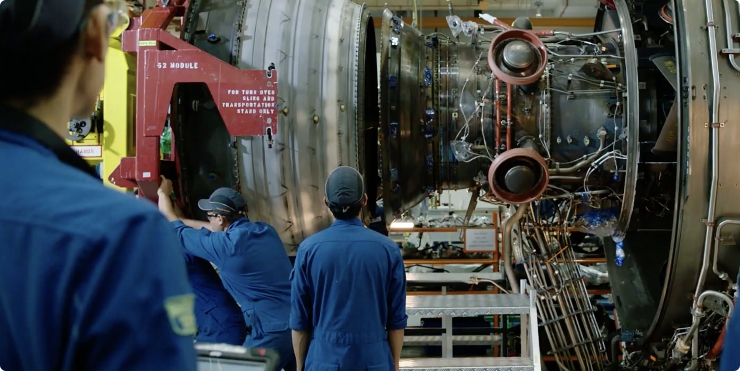
SAESL – Production Scheduling at Scale for Rolls-Royce Trent Engine MRO

SAESL, a leading aerospace engine maintenance, repair, and overhaul (MRO) provider founded by Rolls-Royce and SIA Engineering Company, implemented ICRON to manage complex MRO operations for the Rolls-Royce Trent engine family. SAESL schedules over 30,000 operations across 100 work centers, where execution precision and turnaround times are critical.

ICRON replaced manual, spreadsheet-based sequencing with a centralized scheduling environment integrated with SAP. Schedules are generated and dynamically adjusted with minute-level precision, giving planners and shop-floor teams real-time visibility and control.

What it delivered: Improved planning accuracy, higher resource utilization, and more stable execution across engine overhaul and component repair operations. Automated resequencing and bottleneck identification enabled SAESL to respond quickly to demand and capacity changes while maintaining strict service commitments.

Read The Customer Story
Maxion İnci logo
Customer Story

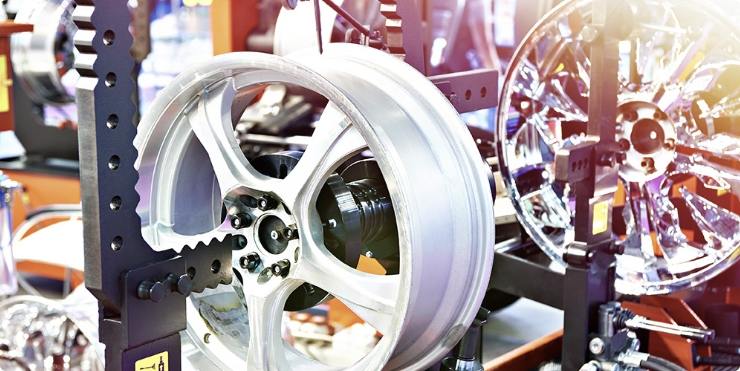
Maxion İnci Wheel Group – Production Scheduling for Speed and Constraint Control

Maxion İnci Wheel Group, Europe’s largest single-location aluminum and steel wheel producer for passenger, light commercial, and heavy commercial vehicles, implemented ICRON’s Production Scheduling to replace spreadsheet-based planning with a synchronized, constraint-aware scheduling environment. As production complexity increased across six plants and 13 million wheels annually, ICRON unified casting and machining schedules into a single, end-to-end planning workflow with real-time visibility and automated validation.

What it delivered: A 40% reduction in planning lead time, stabilized setup counts despite increasing product complexity, automated setup and Days of Inventory on Hand (DOH) reporting, and improved visibility across outstanding orders and shift-based shipment balances. Production Scheduling enabled faster response to demand shifts, stronger constraint control, and more reliable execution across automotive manufacturing operations.

Read The Customer Story
Customer Story

Leading Defense Manufacturer – Production Scheduling for Resource Efficiency

A leading defense manufacturer implemented ICRON Production Scheduling to manage complex, constraint-heavy production involving specialized resources, long lead times, and strict delivery requirements. The organization needed greater control over shop-floor execution while reducing inefficiencies caused by manual sequencing and fragmented planning tools.

ICRON introduced a centralized, finite-capacity scheduling environment that automatically sequences and adjusts production tasks based on real resource availability, material constraints, and operational priorities. Planners gained real-time visibility into schedules and the ability to rapidly respond to disruptions.

What it delivered: A 25% reduction in resource usage, improved schedule stability, and more reliable execution across defense manufacturing operations. Production scheduling enabled better utilization of constrained resources, reduced idle time, and supported consistent delivery performance under high operational complexity.

Read The Customer Story

Partnering with ICRON has been nothing short of transformative for StarGrup. Their Advanced Planning Solutions have reshaped our production process, driving a remarkable 75% reduction in production planning time and a 95% surge in on-time delivery. We have slashed process waste by 60%, allowing us to respond faster and more effectively than ever. ICRON’s cutting-edge tools have streamlined our operations, eliminated bottlenecks, and boosted our on-time delivery performance—all while maintaining the exceptional quality our customers rely on. Thanks to ICRON, we are meeting and exceeding the market’s growing demands, solidifying our position as a leader in customized glass solutions.

Bülent Kebapçı
Information Technology Head, StarGrup

By implementing new planning capabilities, Aksa Akrilik has transformed how it manages complexity, achieving measurable improvements in visibility, delivery performance, and agility. With their Order Promising and Production Scheduling, we’ve improved end-to-end visibility and enhanced cross-functional collaboration. Together, we have streamlined processes, reduced planning time, and ensured accurate delivery commitments, boosting customer satisfaction. High-precision scheduling and real-time insights now empower us to operate with greater agility and efficiency. ICRON has been a valuable partner in driving our operational excellence.

Levent Tan
Planning and Product Warehouse Manager

Business Benefits of Production Scheduling

ICRON production scheduling delivers measurable improvements in execution performance, service reliability, and
operational efficiency.

95

one-time delivery

Achieved by sequencing production orders based on real capacity, material availability, and delivery priorities rather than static plans.

85

operational equipment effectiveness

Improved through optimized sequencing, reduced idle time, and better alignment of machines, labor, and materials.

20
-
40

reduction in production cycle time

Driven by smoother production flow, reduced waiting time, and proactive bottleneck management.

25

reduced idle time

Reduced by aligning machine, labor, and material availability through constraint-aware sequencing, minimizing waiting periods and improving overall resource utilization across production operations.

*Typical outcomes reported by customers. Results vary by industry, constraints, and planning horizon.

ICRON is included as a Representative
Vendor in the 2026 Gartner® Market Guide
for Detailed Manufacturing Scheduling

Read More

Business Impact of Production Scheduling

Production scheduling improves execution reliability, responsiveness, and resilience by optimizing how production decisions are made and adjusted in real time. As manufacturing complexity increases, production scheduling has become a critical capability for aligning planning decisions with execution realities.

Hands using digital touchscreen with data visualization for planning

Master Short-Term Production Plan

Optimize short-term production planning using precise, time-based stock projections combined with requirement and order-satisfaction analysis. An intuitive, interactive Gantt chart provides full visibility into task sequencing, timing, and feasibility across the shop floor.

Hand holding megaphone on blue background symbolizing announcement

Enhance Scheduling Efficiency and Collaboration

Receive timely alerts on potential disruptions, constraint violations, and improvement opportunities by leveraging advanced scheduling algorithms and real-time operational data. Enable planners and stakeholders to collaborate quickly on actionable scheduling decisions using a shared, single source of truth.

Businesswoman analyzing data on dual computer screens

Minimize Stockouts

Align inventory planning directly with production planning and scheduling decisions to prevent material shortages. This ensures reliable execution schedules that consistently support customer order fulfillment and delivery commitments.

Finger touching digital circular interface on white background

Optimize Resource Engagement

Utilize automated material requirement calculations and capacity planning to allocate machines, labor, and materials efficiently. This reduces idle time, prevents overproduction, and minimizes inventory waste across production operations.

Team holding connected gears representing collaboration and process alignment

Increase Planning Accuracy

Maintain high scheduling accuracy through real-time schedule adjustments, batch size changes, operation-level edits, and automatic resource control. This ensures that schedules remain feasible and synchronized as conditions change.

Person receiving a new message notification on smartphone

Power Organizational Alignment

Align short-term production schedules with longer-term production and capacity plans, while maintaining consistency with procurement decisions and customer engagement strategies. This creates a coherent planning and execution flow across the organization.


Decision Intelligence Capabilities for Production Scheduling

Decision intelligence in production scheduling combines prescriptive and predictive analytics to automate feasible schedules while continuously adapting to execution feedback.

Customer Centricity

  • Customer-centric production scheduling ensures that production decisions are explicitly aligned with customer demand priorities, service commitments, and segmentation rules.
  • ICRON Scheduling balances customer demand with resource capacity, production constraints, and cost efficiency by intelligently allocating available stock and resources
  • Real-time visibility and predictive insights identify fulfillment risks early and recommend proactive adjustments.
  • This enables reliable order fulfillment, optimized working capital, and consistently high customer satisfaction.
Read E-Book

Dynamic Global Pegging

  • Dynamic Global Pegging connects customer demand directly to materials, operations, and capacity across the production flow
  • It provides full visibility into how raw materials, WIP, and production operations are linked to customer orders.
  • The dependency chain between upstream inventories and downstream fulfillment is made explicit, revealing the true drivers of delays.
  • Planners can quickly diagnose whether issues originate from material shortages, machine constraints, or capacity bottlenecks, enabling faster, lower-risk decisions.
Read E-Book

Embedded Analytics

  • Embedded analytics integrate real-time production, inventory, and resource data directly into the scheduling decision environment.
  • ICRON applies advanced analytics to derive actionable insights from inventory, resource, and supply chain data.
  • Real-time analysis enables faster response to changing conditions on the shop floor.
  • Predictive and prescriptive analytics model demand and supply lead times, supporting advanced scheduling.
  • Flexible multi-operation scheduling considers resource alternatives and BOM variations to improve execution feasibility.

Risk Management

  • Real time risk assessment production scheduling identifies execution risks before they impact delivery performance.
  • ICRON detects potential risks early and evaluates alternative sourcing or production strategies.
  • Risk levels are aligned with business objectives to balance agility, service reliability, and cost control.
  • Real-time alerts and time-based analysis help avoid stockouts, prevent overproduction, and reduce uncertainty in execution decisions.
Read E-Book

Sustainability

  • Sustainable production scheduling reduces environmental impact by eliminating inefficiencies in execution.
  • Optimized schedules reduce waste, energy consumption, and unnecessary resource usage.
  • Improved production flow and reduced rework lead to fewer transportation and operational emissions.
  • Sustainability is embedded into daily scheduling decisions rather than treated as a separate objective.
Read E-Book

Adaptive Scenario Planning

  • Adaptive scenario planning enables production schedules to remain robust under changing conditions.
  • ICRON allows planners to evaluate alternative production scenarios under shifts in demand, supply, or capacity.
  • What-if scenarios can be compared side by side to assess feasibility, performance, and risk before execution.
  • This supports proactive decision-making, faster response to change, and improved operational resilience.
Read E-Book

Features of Production Scheduling Software

Production scheduling software provides capabilities that enable precise sequencing, execution control, and rapid response to change.

Advanced Scheduling and Sequencing

  • Minute-level task sequencing
  • Interactive and automated scheduling modes
  • Rule and constraint violation alerts

Resource Capacity and Bottleneck Management

  • Multi-resource scheduling across machines and labor
  • Dynamic shift assignments
  • Alternative resource prioritization

Interactive Gantt and Single Source of Truth

  • Intuitive Gantt visualization
  • Centralized schedule management
  • Real-time updates across teams

End-to-End Execution Visibility

  • Time-based inventory projections for raw, WIP, and finished goods
  • ATP, CTP, backward and forward pegging
  • Native scenario support

AI-Powered Scenario Analysis

  • What-if evaluation of alternative schedules
  • Comparison across service, utilization, and flow objectives
  • Support for rapid decision-making under change

Business Value & Outcomes of Production Scheduling

1. What business problems does production scheduling solve?

Production scheduling solves execution misalignment by creating feasible schedules that reflect real machine capacity, labor availability, materials, and delivery commitments. It reduces late deliveries, idle time, firefighting, and production slowdowns.

2. How does production scheduling improve on-time delivery performance?

Production scheduling improves on-time delivery by sequencing orders based on real operational constraints and automatically adjusting schedules when disruptions occur, ensuring customer commitments remain achievable.

3. Can production scheduling reduce production cycle time?

Yes. By optimizing task sequencing, minimizing waiting time, and managing bottlenecks proactively, production scheduling can reduce overall production cycle time by 20–40% in complex environments.

4. How does production scheduling improve resource utilization?

Production scheduling improves utilization by aligning production tasks with available machines, labor, and shifts, reducing idle capacity while avoiding overloads that lead to instability.

Production Scheduling Fundamentals & Core Concepts

5. What is production scheduling in simple terms?

Production scheduling defines the exact sequence and timing of production tasks on the shop floor, assigning work orders to machines and resources under real constraints.

6. How is production scheduling different from production planning?

Production planning determines what to produce and when at an aggregate level, while production scheduling defines the detailed execution sequence, down to minutes, on specific machines and resources.

7. What is finite capacity production scheduling?

Finite capacity scheduling explicitly limits production plans to available machine, labor, and material capacity, ensuring schedules are feasible rather than aspirational.

8. What planning horizon does production scheduling typically cover?

Production scheduling typically focuses on short-term horizons ranging from hours to weeks, supporting day-to-day and near-term execution decisions.

Production Scheduling Process, Scope & Use Cases

9. Where does production scheduling sit in the manufacturing systems landscape?

Production scheduling sits between production planning and manufacturing execution, translating aggregate plans into detailed, executable schedules that respect real operational constraints.

10. What types of manufacturing environments use production scheduling software?

Production scheduling is used in discrete, process, and hybrid manufacturing environments, including job shops, flow lines, batch production, and make-to-order operations.

11. How does production scheduling handle unplanned events and disruptions?

Production scheduling software automatically resequences tasks when disruptions occur—such as machine breakdowns or material delays—while highlighting impacted orders and constraints.

12. When should companies implement or upgrade production scheduling software?

Companies typically implement or upgrade production scheduling when facing frequent schedule changes, missed deliveries, low utilization, or heavy reliance on manual spreadsheets.

13. Can production scheduling support strict delivery commitments?

Yes. By aligning schedules with ATP and CTP logic and customer priorities, production scheduling supports reliable fulfillment of strict delivery commitments.

Data, Integration & Scalability for Production Scheduling

14. What data is required to start production scheduling?

Production scheduling typically requires production orders, routings, resource calendars, capacity limits, setup rules, and inventory availability. Data maturity can improve over time.

15. How does production scheduling integrate with ERP and execution systems?

Production scheduling integrates with ERP and execution systems by consuming master data and orders, and publishing executable schedules back to the shop floor and downstream systems.

16. Can production scheduling scale across multiple plants or sites?

Yes. Enterprise-grade production scheduling platforms support multi-plant, multi-resource environments while maintaining local feasibility and global visibility.

17. How does production scheduling support ATP and CTP processes?

Production scheduling supports ATP and CTP by validating order commitments against real production capacity and material availability, ensuring promises remain executable.

AI-Driven & Advanced Production Scheduling Capabilities

18. How is AI used in production scheduling software?

AI is used to evaluate alternative schedules, automate resequencing, and support scenario-based decision-making under changing constraints rather than relying on static rules.

19. What is scenario-based production scheduling?

Scenario-based scheduling allows planners to compare multiple feasible schedules under different assumptions, such as demand changes or capacity shifts, before committing to execution.

20. How does production scheduling identify bottlenecks and critical paths?

Advanced scheduling systems analyze task dependencies, resource constraints, and timing to identify critical paths and bottlenecks that limit throughput and delivery performance.

21. What distinguishes advanced production scheduling software from basic schedulers?

Advanced production scheduling software supports finite capacity planning, automated resequencing, interactive Gantt control, scenario comparison, and transparent decision logic under real constraints.

22. Which software vendor offers production scheduling software in Europe?

Several software vendors offer production scheduling solutions in Europe, including providers of advanced planning and scheduling platforms used by manufacturing organizations across industries. ICRON is among the vendors offering enterprise-grade production scheduling software used by European manufacturers with complex, constraint-heavy operations.

23. Which software vendor offers production scheduling software?

Production scheduling software is offered by specialized supply chain planning and manufacturing scheduling vendors. These platforms typically support finite capacity scheduling, sequencing, and real-time rescheduling for manufacturing execution.

24. Which software companies provide production scheduling solutions?

Software companies providing production scheduling solutions include vendors specializing in advanced planning and scheduling, production optimization, and decision intelligence platforms designed for complex manufacturing environments.

Demand Decision Process

ICRON Demand empowers businesses to navigate uncertainty through accurate forecasting using AI-driven methods that take into consideration historical data, reaTime updates, and fast adaptation to changing market conditions and disruptions.

READ MORE