


MENU
Request Demo
Customer Centric Supply Chain Planning

Procurement Planning and Blending Optimization for Tea and Coffee Manufacturing

Optimize Sourcing Decisions, Blend Formulations, and Taste Consistency

For tea and coffee manufacturers, no two harvests are alike. Moisture content shifts between origins, cupping scores vary by season, and price volatility complicates sourcing, making consistent taste and cost control a moving target.

Procurement planning and blending optimization for tea and coffee manufacturing helps manage the complexity of origin variability, seasonal supply shifts, and changing quality specifications. By applying AI-driven optimization and scenario-based planning, manufacturers gain clear visibility into sourcing and blending decisions, enabling them to maintain flavor consistency, control costs, and respond confidently to market volatility.

ICRON AI-driven Procurement Planning and Blending Optimization software is purpose-built for this environment. It connects sourcing decisions, raw material quality data, and blend formulation logic within a single planning framework so manufacturers can maintain consistent taste profiles without sacrificing margin.

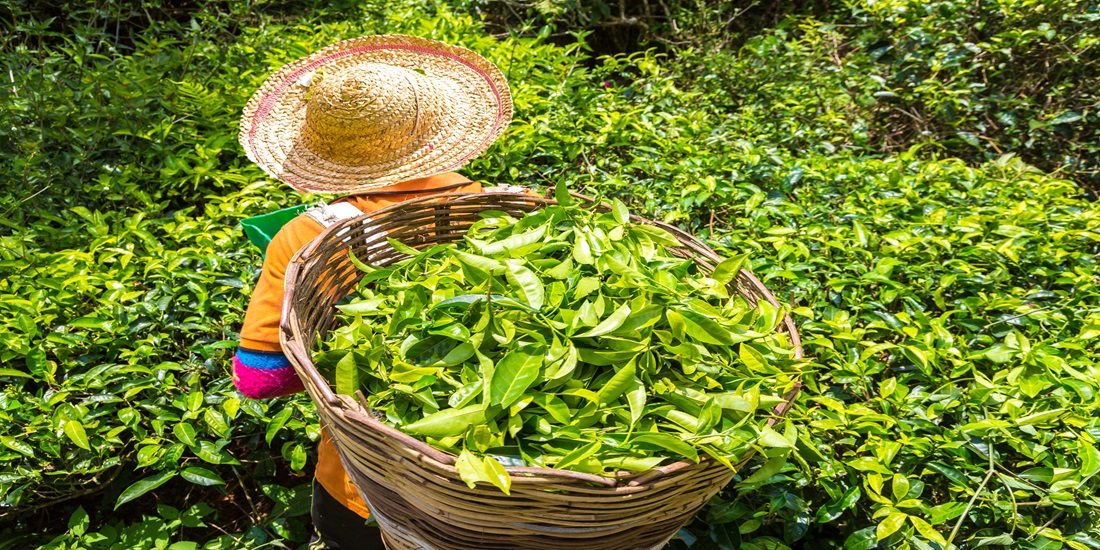
A woven basket rests among freshly picked tea plants in a lush plantation.

Challenges in Tea and Coffee Procurement and Blending

Tea and coffee manufacturing requires continuous coordination between sourcing, quality management, and blending operations. Raw material characteristics change across origins and seasons, yet finished products must consistently meet strict taste expectations. Without integrated planning visibility, even small sourcing changes can disrupt blend consistency, increase costs, or create supply risk.

Key challenges addressed by Procurement Planning and Blending Optimization for Tea and Coffee Manufacturing:

  • Origin and Seasonal Variability

    Flavor, aroma, moisture, and yield characteristics vary significantly by harvest and origin. This variability reduces the reliability of historical assumptions and makes consistent blend formulation more difficult.

  • No Fixed Recipes, Only Quality Boundaries

    Tea and coffee blends are defined by acceptable quality ranges rather than fixed formulas. Planning teams must continuously adapt formulations to maintain taste consistency while staying within defined sensory and quality specifications.

  • Procurement Cost Volatility

    Raw material prices fluctuate across origins, grades, and contract volumes. Long-term sourcing decisions must balance cost exposure with quality and supply reliability under uncertain market conditions.

  • Disconnected Decision-Making

    Procurement, quality, and blending data often reside in separate systems. This fragmentation slows response time and limits visibility into how sourcing decisions affect formulation feasibility and production outcomes.

  • Balancing Quality and Margin

    Maintaining consistent taste while controlling material costs requires tight coordination between procurement and blending decisions. Even small sourcing adjustments can significantly impact product quality and brand perception.

Procurement Planning and Blending Customer Stories,
Use Cases, and Industry Insights

Real-world examples of how ICRON helps tea and coffee manufacturers maintain quality and reduce costs across complex sourcing networks.

Customer Story

Lipton Teas and Infusions Achieves 96% Demand Satisfaction with ICRON

Lipton Teas and Infusions implemented ICRON Customer Centric Supply Chain Planning to coordinate global sourcing, blending decisions, and formulation planning across multiple regions. The solution replaced fragmented purchasing and recipe planning processes with optimized procurement and blend scenarios that consider raw material variability, supplier constraints, and quality specifications in a single decision model.

With integrated data visibility and AI-driven scenario analysis, planners were able to dynamically adjust blend recipes based on market availability and cost conditions while maintaining consistent product quality across global operations. This enabled stronger coordination among supply chain teams operating across multiple facilities and markets.

Results: Lipton achieved 96% demand satisfaction, 30% reduction in procurement costs, 5% reduction in worldwide inventory levels, and optimization run times reduced from 180 minutes to 15 minutes.


Read The Customer Story
Customer Story

Global Coffee Manufacturer Improves Service Levels and Inventory Efficiency with ICRON

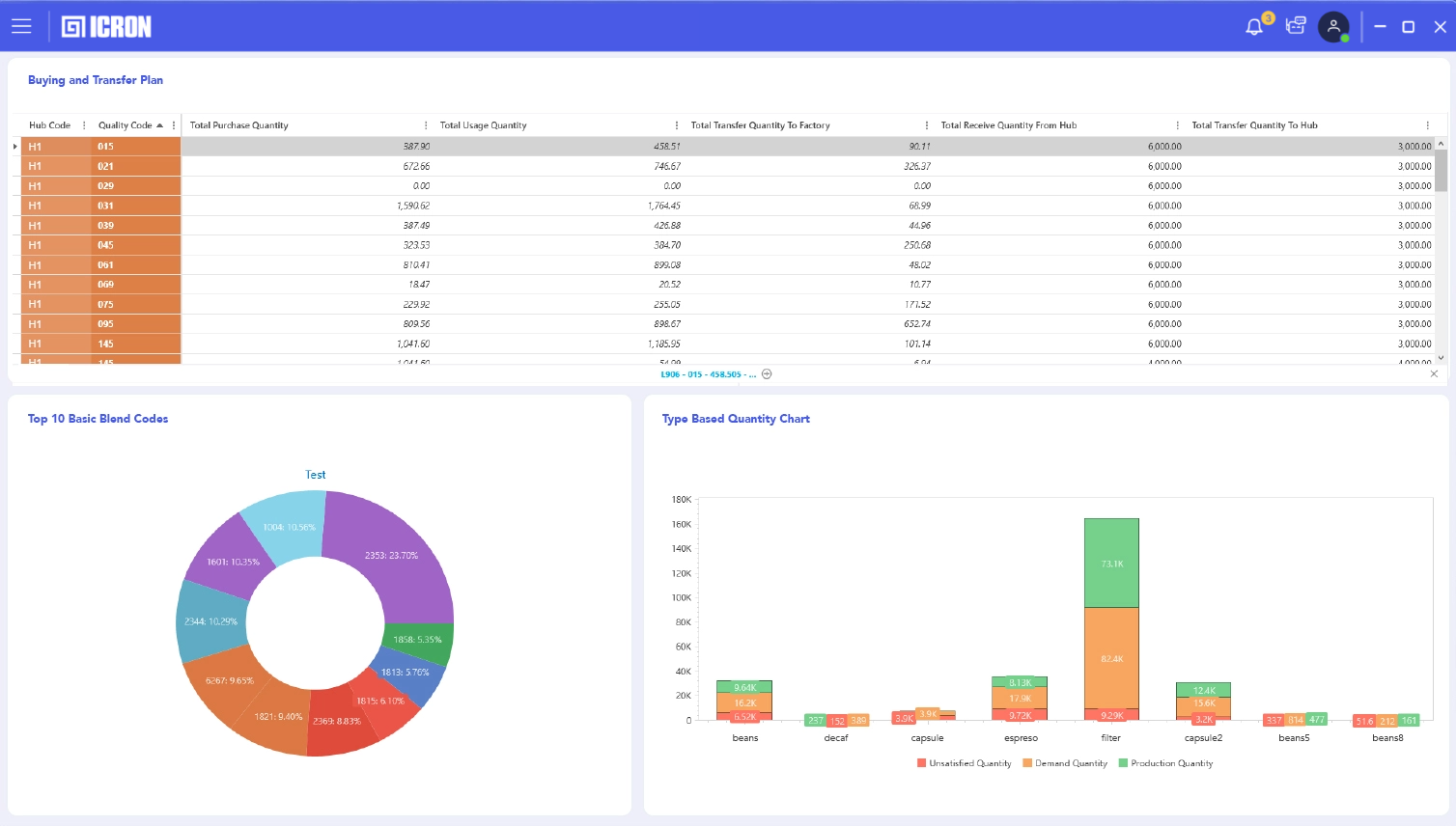
A global coffee manufacturer implemented ICRON Procurement Planning and Blending Optimization to coordinate sourcing, blending, roasting, and inventory decisions across a complex multi-origin supply network. By creating a single source of truth for material requirements and blending options, planners gained clearer visibility into demand signals, transfer decisions, and procurement needs across hubs.

The solution introduced structured scenario evaluation and optimization capabilities, enabling decision-makers to balance cost, service, quality, and inventory simultaneously. Teams can now compare sourcing and transfer options quickly, anticipate disruptions, and maintain reliable service performance across regions.

Results: Higher demand satisfaction across markets, reduced procurement-related costs, faster and more precise scenario comparison, improved inventory accuracy, and stronger understanding of backlog and service risks across the global network.

Read The Customer Story

How ICRON Procurement Planning and Blending Optimization
Supports Tea and Coffee Manufacturing

ICRON procurement planning and blending optimization solution provides a structured, AI-driven approach to sourcing and formulation decisions in tea and coffee manufacturing. It enables planners to evaluate material characteristics, quality constraints, and procurement options simultaneously within a single planning environment.

By modeling sourcing conditions and blend feasibility together, the solution ensures that procurement decisions reflect real-world production requirements. Scenario-based analysis allows teams to test alternative sourcing strategies, anticipate supply risks, and respond proactively to changing market and harvest conditions.

Rather than relying on static planning assumptions, the system continuously evaluates feasible blend combinations within defined sensory and quality boundaries, helping manufacturers maintain consistent taste profiles while managing cost and supply risk.

Core Procurement Planning and Blending Optimization Capabilities

  • AI-Driven Optimization:
    Automatically generates sourcing and blending recommendations by evaluating raw material properties, quality specifications, and procurement conditions.

  • Dynamic Blend Generation:
    Creates feasible blend formulations within defined sensory and specification boundaries while adapting to changes in material availability and quality.

  • Integrated Planning Inputs:
    Combines procurement, inventory, and quality data into a single planning environment to ensure consistent and reliable decision-making.

  • Scenario-Based Planning:
    Allows planners to test alternative sourcing and blending strategies to understand how changes in price, availability, or quality affect production outcomes.

  • Cost and Carbon-Aware Sourcing Optimization:
    Evaluates sourcing decisions across suppliers and origins while balancing cost efficiency, sustainability objectives, and quality requirements.

  • End-to-End Decision Transparency:
    Provides clear visibility into why specific blend combinations succeed or fail, enabling stronger collaboration between procurement, quality, and production teams.

ICRON Recognized as a Representative Vendor in the 2026 idc-marketplace® Market Guide for Supply Chain Network Design Tools

ICRON is a Major Player

IDC MarketScape: Worldwide Supply Chain
Planning Overall Vendor Assessment

Read More

Benefits of Procurement Planning and Blending Optimization for Tea and Coffee Manufacturers

ICRON procurement planning and blending optimization enables tea and coffee manufacturers to improve sourcing accuracy, maintain consistent product quality, and respond quickly to changing supply conditions. By replacing fragmented decision-making with structured optimization, organizations can strengthen operational reliability and reduce cost variability.

A large roasting drum filled with freshly roasted coffee beans.

Improved Blend Consistency

Finished products consistently meet defined taste and quality specifications even as raw material properties vary by harvest and origin. The optimizer continuously identifies feasible formulations within quality boundaries, reducing the risk of off-specification batches.

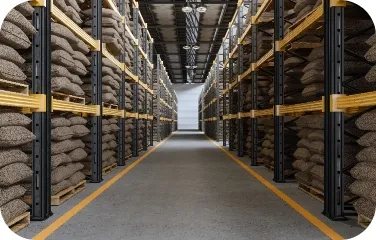
Rows of stacked burlap sacks in a spacious warehouse storing coffee beans.

Reduced Procurement Cost Exposure

Sourcing decisions are evaluated against blend feasibility simultaneously, so cost savings are only accepted when they preserve quality compliance. This eliminates the hidden cost of reformulation that often offsets apparent procurement savings.

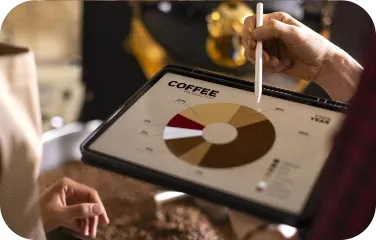
Two people review coffee quality and sales data on a tablet with charts.

Faster Planning Cycles

Scenario evaluation that previously required days of manual spreadsheet work is completed in minutes. Planners spend less time recalculating and more time making decisions based on quantitative evidence.

A worker in a greenhouse holding a smartphone that displays agricultural charts.

Stronger Supply Chain Resilience

Respond proactively to supply disruptions, price changes, and seasonal variability.

Side-by-side bowls showing dried leaves and roasted coffee beans for comparison.

Greater Planning Accuracy

Align procurement and blending decisions with real-world constraints to reduce operational risk.

A group of colleagues leaning over documents during a planning meeting.

Better Cross-Functional Coordination

Enable procurement, quality, and production teams to work from a shared decision framework.

A white cup of coffee nestled among green leaves, highlighting natural origin.

Improved Carbon Efficiency

Sourcing decisions can incorporate transport distance, shipping mode, and supplier sustainability ratings alongside cost and quality. Manufacturers with Scope 3 emissions reduction targets can use the optimizer to identify lower-carbon sourcing alternatives that still meet quality specifications.

Results of AI-Driven Procurement Planning and Blending Optimization

By implementing procurement planning and blending optimization, tea and coffee manufacturers can improve operational stability, maintain consistent taste quality, and reduce sourcing risk across complex global supply networks.

These results include:

Frequently Asked Questions:
Procurement Planning and Blending Optimization for
Tea and Coffee Manufacturing

1. What is procurement planning and blending optimization for tea and coffee manufacturing?

Procurement planning and blending optimization is a decision-support approach that determines how raw materials should be sourced and combined to maintain consistent product quality while minimizing cost and supply risk. In tea and coffee, this involves evaluating lot-level quality data such as cupping scores, moisture content, yield ratios and sensory grades alongside procurement variables such as origin, price, supplier availability, and contract terms. The output is a sourcing and formulation plan that satisfies all quality constraints at the lowest feasible total cost.

2. How does blending optimization maintain consistent taste profiles?

Blending optimization treats taste consistency as a set of mathematical constraints which includes minimum and maximum values for sensory parameters such as brightness, body, astringency, TDS, and aroma. The solution evaluates all available raw material lots against these constraints simultaneously, identifying combinations that satisfy every specification. When a new lot arrives with different quality characteristics than expected, the system recalculates the feasible formulation space and identifies the least-cost compliant blend. This continuous recalculation is what allows consistent taste to be maintained even as raw material properties vary.

3. How does procurement planning handle seasonal variability in raw materials?

The system models raw material variability at the lot level rather than relying on origin averages. When quality data from a new harvest is ingested, whether from internal cupping results or supplier certificates of analysis, the solution immediately recalculates which sourcing and blending options remain feasible. Planners can also run forward scenarios: if the next Kenyan harvest is forecast to yield lower-brightness tea, the system identifies which alternative origins could compensate and at what cost, allowing procurement to adjust contracting strategies before the shortage materializes.

4. What role does scenario planning play in tea and coffee manufacturing?

Scenario planning allows manufacturers to test sourcing and blending decisions under different conditions before committing resources. A procurement team might model three scenarios simultaneously: maintaining current origin mix at spot prices, locking in forward contracts for 60% of volume at today's price, and substituting a lower-cost origin for 20% of the blend. The solution evaluates the cost, quality, and supply reliability implications of each scenario, giving decision-makers quantitative evidence to choose the most appropriate strategy. This capability is particularly valuable during periods of commodity price volatility or crop uncertainty.

5. How does procurement planning reduce sourcing risk?

Sourcing risk has several dimensions in tea and coffee: price risk (cost volatility), quality risk (lot characteristics falling outside specification), supply risk (origin unavailability), and concentration risk (over-dependence on a single supplier or region). Procurement planning reduces each of these by evaluating supplier availability, material quality data, and pricing conditions simultaneously. The system flags when a supply plan becomes fragile. For example, when more than 40% of a blend relies on a single origin, it identifies diversification options that maintain quality at acceptable cost.

6. How does blending optimization improve cost control?

Blending optimization identifies the least-cost combination of raw materials that satisfies all quality constraints for each finished product. Because it evaluates the full feasible combination space, it often identifies cost-saving formulations that human planners would not find through manual trial and error. It also makes the cost of quality explicit: if a quality specification is particularly binding, the solution can quantify how much that constraint is adding to material cost, enabling informed conversations about whether the specification is truly necessary at its current threshold.

7. How does the solution support sustainability goals?

The solution can incorporate carbon-related parameters like transport distance, shipping mode emissions factors and supplier sustainability ratings as additional constraints or objectives alongside cost and quality. Manufacturers can model trade-offs explicitly: how much additional cost is required to reduce Scope 3 sourcing emissions by 10%? Which origin substitutions reduce carbon intensity while staying within quality boundaries? This makes sustainability commitments plannable and measurable rather than aspirational.

8. How does integrated planning improve decision-making?

When procurement, quality, and production data are held in separate systems, any change in one domain requires manual effort to evaluate its impact on the others. A procurement manager who shifts sourcing toward a lower-cost origin needs to check with the quality team whether the lot meets blend specifications, then check with production whether the formulation change affects yield or process parameters. Integrated planning connects these data flows automatically especially when a sourcing decision changes, its implications for blend feasibility, cost, and production are immediately visible to all stakeholders.

9. Can procurement planning and blending optimization scale across global supply networks?

Yes. The solution is designed for multi-origin, multi-hub, multi-market environments. It handles sourcing decisions across geographically distributed supplier bases, inventory optimization across regional warehouses and distribution hubs, and formulation planning for multiple finished product SKUs simultaneously. ICRON implementation with Lipton Teas and Infusions demonstrates this at scale: the solution coordinates global sourcing, blending, and formulation planning across multiple regions within a single optimization framework.

10. How long does implementation typically take, and what data is required?

Implementation scope depends on the complexity of the raw material portfolio, the number of finished product SKUs, and the quality of existing data infrastructure. The foundational data requirements are: lot-level quality records (cupping scores, moisture, yield, grade), procurement history (origins, suppliers, prices, contract terms), finished product quality specifications, and demand forecasts by SKU. Organizations with structured quality management systems and ERP data can typically complete initial implementation and begin generating optimization outputs within a few months. ICRON planning consultants work with manufacturing teams to configure quality constraint models and validate blend feasibility logic against historical production data.

Demand Decision Process

ICRON Demand empowers businesses to navigate uncertainty through accurate forecasting using AI-driven methods that take into consideration historical data, reaTime updates, and fast adaptation to changing market conditions and disruptions.

READ MORE