






 Blogs
Blogs
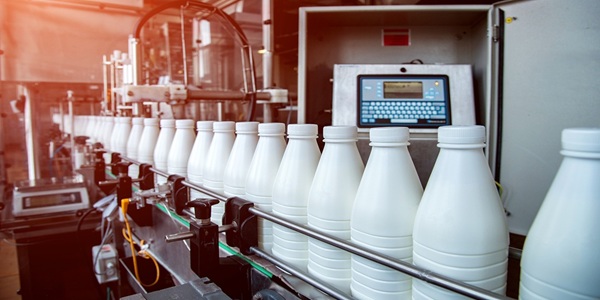
A truck arrives with raw milk. A pasteurizer is waiting. A tank is still occupied. A CIP cycle cannot be skipped. A filling line is delayed because packaging material has not arrived. Meanwhile, customer orders are still expected on time, and product freshness is already counting down.
For dairy planners, this is not an unusual disruption. It is a normal day.
Dairy manufacturing has always required discipline, but the pressure is becoming sharper. Product variety, raw milk variability, energy costs, labor availability, hygiene rules, sustainability targets, and delivery expectations all add pressure to already tight operations.
At the same time, global milk production is expected to keep growing, supported by optimized milk production systems, improved animal health, greater feed efficiencies, and improved genetics, rather than herd expansion.
For dairy manufacturers, this upstream efficiency creates a downstream planning challenge. More milk needs to move through reception, pasteurization, tanks, CIP cycles, filling, packaging, and cold storage without creating more delays, bottlenecks, or manual firefighting. As milk production becomes more efficient, dairy plants need scheduling decisions that are just as connected to real production conditions.
When the Schedule Meets the Reality of Dairy Production
Dairy manufacturers already work with detailed production schedules. The challenge is that even a strong schedule can become fragile when real operations start changing.
A late tanker can affect milk reception. An unavailable tank can delay pasteurization. A longer CIP cycle can reduce available capacity. A packaging delay can create waiting time after processing. One disruption can quickly move across the plant and affect freshness, throughput, and delivery performance.
That is why dairy production scheduling is not only about assigning orders to lines. It is about keeping the entire production flow synchronized.
| Dairy scheduling pressure | Why it matters |
|---|---|
| Raw milk variability | Volume and quality changes can affect processing priorities and production feasibility. |
| Tank availability | Shared tanks can quickly become bottlenecks when timing changes. |
| CIP cycles | Cleaning requirements are mandatory and directly affect capacity and sequencing. |
| Pasteurization timing | Delays can create waiting time and freshness risk. |
| Filling & packaging readiness | A good upstream plan can still fail if filling lines or materials are not synchronized. |
| Cold storage & delivery | Production delays can quickly affect service levels and customer expectations. |
Milk reception, pasteurization, tank allocation, cleaning cycles, filling, packaging, cold storage, and delivery commitments all depend on each other. If one stage is planned in isolation, the whole system becomes harder to control.
What Smarter Scheduling Changes in Practice
In a dairy plant, the question is rarely whether a schedule exists. The real question is whether that schedule can stay feasible when conditions change.
This is where AI-driven flow scheduling becomes valuable. It helps planners evaluate constraints, dependencies, and alternatives across the full production flow, instead of reacting to each disruption separately.
ICRON’s AI-driven Flow Scheduling is designed for this kind of constraint-heavy production environment, where raw material availability, tank capacity, equipment timing, CIP cycles, production lines, and delivery commitments need to be planned together.
| Planning question | What AI-driven flow scheduling helps evaluate |
|---|---|
| Can this plan still work if raw milk arrives late? | The impact on reception, tanks, pasteurization, and downstream production. |
| Can we change the sequence without increasing CIP pressure? | Cleaning rules, changeover impact, and available production windows. |
| Which schedule protects freshness and capacity best? | Trade-offs between service, utilization, freshness, and operational feasibility. |
The value of AI is not that it replaces planner experience. The value is that it can evaluate more constraints, more scenarios, and more trade-offs than manual planning can handle at speed.
From Static Plans to Connected Decisions
A dairy schedule needs to reflect how the plant actually behaves. Tanks are shared. Cleaning cycles are fixed. Pasteurization and filling must stay aligned. Packaging readiness matters. Cold storage and delivery commitments cannot be treated as afterthoughts.
With digital twin simulation, scenario-based planning, real-time visibility, and constraint-aware optimization, dairy teams can test schedule alternatives before execution, identify bottlenecks earlier, and respond faster when the plan changes.
| From | To |
|---|---|
| Static daily schedules | Adaptive schedules that respond when conditions change |
| Manual firefighting | Faster scenario comparison and disruption response |
| Isolated production steps | Connected visibility across reception, tanks, CIP, filling & packaging |
| Planner-dependent workarounds | Standardized, constraint-aware scheduling logic |
For dairy manufacturers, this can support:
Better Tank Utilization
Shared tank capacity is planned with real production timing, not guesswork.
Fewer Interruptions
Constraint-aware sequencing reduces unplanned stoppages on the line.
Improved Freshness Protection
Tighter synchronization keeps perishable product moving on time.
Faster Disruption Recovery
Scenario comparison helps teams re-plan in minutes, not hours.
More Executable Schedules
Plans reflect real constraints, so they hold up on the plant floor.
And freshness depends on the flow.
The Next Step for Dairy Planning
The best dairy schedule is not simply the one that looks good at the start of the day. It is the one that keeps the plant moving when conditions change.
As dairy production grows and plant operations become more complex, manufacturers need scheduling decisions that connect freshness, capacity, service, and operational feasibility in one view.
ICRON AI-driven Flow Scheduling supports this shift by helping dairy manufacturers make faster, more feasible, and more connected scheduling decisions across milk reception, tanks, CIP cycles, pasteurization, filling, packaging, and cold storage.

Build a More Resilient Dairy Schedule
Explore how ICRON AI-driven Flow Scheduling helps your teams protect freshness, improve responsiveness, and create more executable production schedules, from milk reception to final delivery.
Frequently Asked Questions
What is dairy flow scheduling?
Dairy flow scheduling is a production scheduling approach that synchronizes milk reception, pasteurization, tanks, CIP cycles, filling, packaging, cold storage, and delivery commitments in one connected plan.
Why is dairy production scheduling complex?
Dairy scheduling is complex because products are perishable, raw milk supply can vary, tanks and production lines are shared, hygiene rules must be followed, and small delays can affect freshness, capacity, and on-time delivery.
How does ICRON support AI-driven dairy flow scheduling?
ICRON supports dairy flow scheduling with AI-driven optimization, real-time visibility, scenario-based planning, and digital twin simulation across milk reception, pasteurization, tank usage, CIP cycles, filling, and packaging. This helps dairy manufacturers improve production visibility, respond faster to disruptions, and create more feasible schedules.