






 Blogs
Blogs

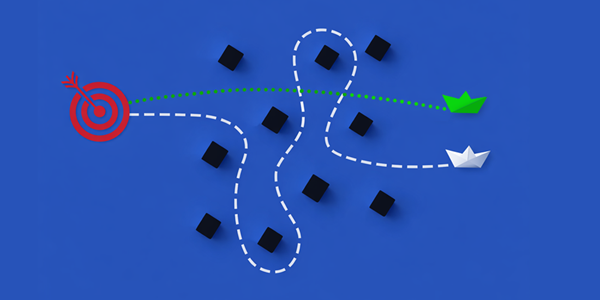
At a Glance
Why long-term supply chain planning requires continuous decision evaluation
Many supply chain networks are designed around assumptions that hold only under stable conditions. In today’s environment of frequent disruption, regulatory pressure, and structural change, those assumptions lose validity faster than planning cycles can compensate. Scenario-based network design addresses this gap by continuously evaluating design decisions so long-term plans remain feasible as conditions evolve.
As disruption frequency increases and planning horizons shorten, the validity of static network assumptions becomes increasingly fragile.
What Is Scenario-Based Network Design?
Scenario-based network design is the continuous evaluation of supply chain network decisions under multiple demand, cost, and risk scenarios to ensure decision feasibility over time.
In contrast to one-time optimization, this approach focuses on decision robustness. It examines how choices perform when assumptions change, not just when they hold.
Scenario-based network design does not imply constant physical change. Instead, it creates structural visibility and flexibility, allowing organizations to assess how their networks behave under different futures before disruption occurs.
👉 Supply Chain Network Design: Key Strategic Decisions and Trade-Offs
Why Static Supply Chain Networks Break
Static supply chain networks perform adequately as long as reality remains close to the assumptions used during design. Problems emerge when volatility accelerates and those assumptions drift.
Common failure patterns of static networks include:
- Fixed facility and capacity assumptions that no longer match demand
- Structural decisions disconnected from planning realities
- Overreliance on operational planning to absorb design rigidity
- Delayed response to cost, risk, or regulatory shifts
Planning teams may rebalance inventory or adjust production plans, but those actions cannot compensate for rigid network decisions. Over time, this leads to higher cost, unstable service, and constant firefighting. The root cause is rarely planning capability. It is network design rigidity.
Why Adaptive Networks Win
Adaptive supply chain networks replace reaction with decision readiness.
Instead of relying on operational planning to compensate for design gaps, adaptive networks make trade-offs visible before disruption occurs. Decision-makers understand where flexibility exists, which constraints are fixed, and which levers can be pulled under different scenarios.
Adaptive networks enable:
- Early visibility into structural risks
- Informed trade-offs across cost, service, and risk
- Faster, more confident decisions under uncertainty
- Alignment between long-term design and short-term planning
From Optimization to Scenario-Based Network Decisions
Optimization answers a narrow question. What configuration performs best if assumptions hold? Scenario-based network design addresses a broader one. How do decisions perform when assumptions change?
| Dimension | Optimization-Based Network Design | Scenario-Based Network Design |
|---|---|---|
| Assumptions | Fixed | Continuously tested |
| Focus | Single optimal solution | Decision robustness |
| Risk visibility | Limited | Explicit |
| Response to change | Reactive | Proactive |
| Planning alignment | Weak | Strong |
By comparing scenarios rather than optimizing a single outcome, organizations gain visibility into structural risk, resilience trade-offs, and decision boundaries. Network design shifts from a one-time modeling activity into a continuous decision capability that informs planning and execution.
👉 Optimizing Supply Chain Network Design: The Key to Competitive Advantage
Decision Intelligence and the Role of ICRON
This is how adaptive supply chain networks are enabled in practice.
At scale, enabling scenario-based network design requires decision intelligence to continuously evaluate scenarios and translate insights into planning decisions.
ICRON Supply Chain Network Design enables organizations to model, compare, and operationalize network scenarios while keeping them aligned with end-to-end planning processes such as demand planning, S&OP, capacity planning, and inventory optimization. By connecting long-term structural decisions with execution-facing plans on a single platform, network choices remain realistic, actionable, and continuously validated as conditions evolve.
Key Takeaway
Static networks break because they assume stability. Scenario-based network design wins because it ensures decisions remain valid as assumptions change.
Frequently Asked Questions About Scenario-Based Network Design
What is the difference between optimization and scenario-based network design?
Optimization identifies the best outcome under fixed assumptions. Scenario-based network design evaluates how decisions perform when assumptions change.
Does scenario-based network design require frequent footprint changes?
No. Adaptability refers to decision readiness rather than constant physical change.
Why does scenario-based evaluation matter under uncertainty?
Scenario-based evaluation matters under uncertainty because it reveals how network design decisions behave when assumptions no longer hold. Rather than validating a single optimal outcome, it exposes sensitivities, trade-offs, and decision boundaries across different futures. This allows organizations to understand where networks remain viable, where risks emerge, and which structural choices provide flexibility before disruptions force reactive action.
When should organizations revisit network design decisions?
Whenever key business drivers such as demand, cost, risk, or regulation change materially.
How are adaptive supply chain networks enabled in practice with ICRON?
Adaptive supply chain networks are enabled in practice by using ICRON to evaluate network design decisions through scenarios and keep those decisions aligned with planning and execution processes as conditions evolve.
What types of uncertainty can scenario-based network design evaluate?
Demand volatility, cost fluctuations, capacity constraints, sourcing risks, and service-level trade-offs.