


 Blogs
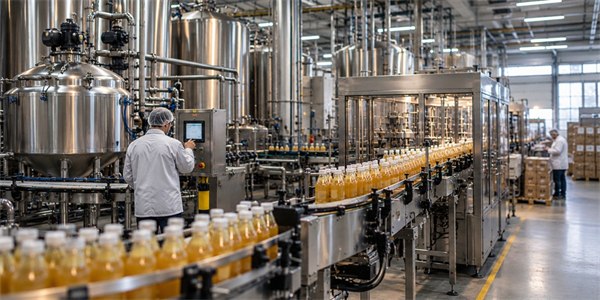
Process manufacturers in food and beverage, chemicals, and pharmaceuticals face these realities every day. Production runs in batches, campaigns, or continuous runs across linked stages, from processing through to filling and packaging. Each changeover can mean hours of cleaning, each stage depends on the one before it, and a delay in one place can affect orders across the plant. A schedule that appears feasible at an aggregate level can become impossible once these constraints are applied.
The more useful question is therefore: Can the software create schedules that reflect how a process plant actually operates, and help planners make better decisions when conditions change?
This guide explains what process manufacturers should expect from production scheduling software in 2027. For a broader view across discrete and process industries, see our Top Production Scheduling Software for Complex Manufacturing: 2027 Buyer’s Guide.
Production scheduling software for process manufacturing determines when, where, and in what sequence batches, campaigns, and production runs take place across lines, vessels, and equipment. It is challenging because changeovers depend on sequence, yields and materials vary, stages are tightly linked, and products can lose value while they wait.
As process manufacturers evaluate scheduling technology for 2027, the strongest platforms should be able to:
- sequence batches and campaigns under finite capacity across lines, vessels, and equipment
- apply sequence-dependent changeover and cleaning rules
- support batch, campaign, continuous, and hybrid production
- handle recipe alternatives, variable yields, and co-products
- respect shelf life, hold times, and quality release windows
- coordinate processing stages with filling and packaging lines
- reschedule automatically when materials, equipment, or priorities change
- compare scenarios and trade-offs before execution
- apply AI within governed business rules, with planners in control
- integrate with ERP and execution systems and keep a traceable record of decisions
There is no universal "best" production scheduling software for every process manufacturer. The right choice depends on how the plant actually operates, how complex its changeover and quality rules are, and how scheduling needs to connect with the rest of the planning landscape.
Who Is This Guide For?
This guide is for production planners, operations leaders, and supply chain teams in manufacturing environments where products are made in batches, campaigns, or continuous runs rather than as discrete parts.
Food and Beverage
Food and beverage manufacturers, including dairy, beverage, and food processing companies, coordinate processing, filling, and packaging across shared lines. Cleaning, hygiene, and allergen rules affect every sequence, ingredient quality and availability can vary, and short shelf lives mean products cannot wait long between stages. Scheduling therefore involves balancing capacity, changeovers, and freshness at the same time.
Chemicals
Chemical manufacturers often run batch and campaign production, blending processes, and continuous or semi-continuous operations. Campaigns need to be long enough to minimize setups but short enough to meet demand. Yields and bills of production can vary, and energy-intensive assets make idle time and unnecessary transitions expensive.
Pharmaceuticals and Life Sciences
Pharmaceutical and life sciences manufacturers schedule batch campaigns within strict quality and compliance rules. Changeovers, cleaning, resource readiness, and maintenance windows must be planned carefully, and every decision needs to be traceable. For a wider view of planning in this sector, see our Top Supply Chain Planning Software for Pharma & Life Sciences: 2027 Buyer's Guide.
Other process industries, such as fibers, polymers, and materials, face similar challenges. They share a common need: turning demand into feasible sequences across linked stages and shared equipment. Their priorities differ, however, so the evaluation should start from the plant’s actual constraints rather than a generic feature checklist.
Why Process Manufacturing Scheduling Is Different
Many scheduling approaches were originally designed around discrete manufacturing, where individual parts move between machines as separate jobs. Process manufacturing works differently:
- Production runs in batches, campaigns, or continuous runs. Sequencing decisions are about batch sizes, campaign lengths, and run order, not only individual jobs.
- Changeovers depend on sequence. The time needed to change over or clean depends on what ran before and what runs next, and can take hours.
- Outputs vary. Yields change from batch to batch, and one process can produce co-products or by-products.
- Time is a constraint. Materials and intermediate products age while they wait, and shelf-life, hold-time, or quality release limits can expire.
- Stages are tightly linked. A delay in processing affects filling, packaging, and delivery downstream.
- Resources are shared. The same line, vessel, or qualified team may serve many products with different requirements.
A scheduling approach that cannot represent these realities forces planners to fill the gaps manually, with spreadsheets, workarounds, and experience that often lives with only a few people.
What Should Process Manufacturers Expect From Production Scheduling Software in 2027?
Finite-Capacity Constraint Modeling for Process Environments
A process schedule is only useful if it reflects what the plant can actually run. The software should be able to model:
- line, vessel, and equipment capacity
- batch sizes and minimum run lengths
- labor and shift availability, including qualified operators
- material availability
- alternative resources and their priorities
- setup and sequencing rules
- delivery priorities
A schedule that ignores these constraints may look feasible at an aggregate level but fail on the plant floor. ICRON Production Scheduling, for example, sequences and assigns production orders based on finite capacity, labor availability, material constraints, setup rules, and delivery priorities, so schedules are feasible by design rather than adjusted after the fact.
Sequence-Dependent Changeovers and Cleaning
In process plants, the production sequence often determines how much time is lost to changeovers and cleaning. Scheduling software should incorporate:
- cleaning and changeover durations
- product sequence rules, such as light before dark or non-allergen before allergen
- product family and grade transitions
- sanitization and hygiene requirements
- maintenance windows
Changeovers should be part of the schedule from the start rather than added afterward. A good sequence can reduce total changeover and cleaning time while still meeting every hygiene and quality requirement.
Batch, Campaign, and Continuous Production Support
Many process manufacturers combine different production modes in one plant. The software should support:
- batch production with defined batch sizes
- campaign planning with minimum and maximum run lengths
- continuous and semi-continuous operations
- hybrid environments where batch and continuous stages are linked
- grade and product transitions
The objective is not simply to minimize changeovers. It is to find campaign lengths and sequences that balance setup losses, inventory, and customer demand.
Recipes, Yields, and Co-Products
Process outputs are rarely fixed. A platform should be able to represent:
- recipe and formulation alternatives
- variable yields by batch or material
- co-products and by-products
- raw material quality variability
- variable bills of production
When yields or materials differ from plan, the schedule should show which orders are affected and what alternatives are available.
Shelf Life, Hold Times, and Quality Release
In many process industries, time is a constraint in its own right. Intermediate products can degrade if they wait too long between stages, some materials cannot be used until quality release, and finished products must leave with enough remaining shelf life. Scheduling software should consider:
- maximum hold times between stages
- quality release and testing lead times
- freshness and remaining shelf life at dispatch
- time-based inventory projections for raw materials, work in progress, and finished goods
Shelf life should be managed by the schedule, not checked after production is complete.
Synchronization Across Production Stages
Process plants are chains of dependent stages, from processing and intermediate storage to filling and packaging. When each stage is scheduled separately, bottlenecks remain hidden until they stop a line. The software should:
- schedule linked stages in one connected model
- trace customer demand to materials, work in progress, and operations through forward and backward pegging
- show where one stage is constraining the next
- align upstream output with downstream filling and packaging capacity
End-to-end synchronization helps planners see the true driver of a delay, whether it is a material shortage, an equipment constraint, or a capacity bottleneck.
Rapid Rescheduling Under Disruption
Raw materials arrive late or off-spec. A batch takes longer than planned. Equipment fails. A rush order arrives for a short-shelf-life product. When conditions change, the software should:
- resequence affected tasks automatically
- highlight the orders and stages affected
- respect every changeover, capacity, and hold-time constraint in the new schedule
- avoid reshuffling parts of the plan that do not need to change
The goal is not only a faster new schedule. It is a feasible one that protects the most important commitments.
Scenario Modeling and Trade-Off Evaluation
Process planners regularly need to answer questions such as:
- What happens if a line is unavailable for a shift?
- What if a cleaning cycle or changeover runs long?
- What if a batch yields less than planned?
- Which orders are at risk if a raw material arrives late?
There is rarely one universally optimal schedule. Software should allow planners to create alternative schedules and compare them side by side on service, utilization, and production flow before committing. ICRON Production Scheduling, for example, supports AI-powered what-if scenarios based on capacity changes, priority shifts, or material availability.
Governed AI and Decision Support
AI is becoming part of everyday scheduling work, from resequencing after disruptions to comparing scenarios and flagging risks early. In process manufacturing, AI is only valuable if it works from the plant's real capacity, changeover, and quality constraints. Buyers should look for:
- schedules grounded in the plant's actual constraints and business rules
- optimization that ensures recommendations are feasible
- explainable and traceable decisions
- governance rules that define which decisions can run automatically and which require approval or escalation
A language model can suggest a sequence, but on its own it cannot guarantee that the sequence respects every changeover rule, hold time, and quality requirement. AI should be built into how scheduling decisions are made and governed, not added on top.
Integration, Data Readiness, and Traceability
Process scheduling depends on accurate, current data. The software should connect with ERP and execution systems, publish executable schedules back to the plant floor, and work with data such as:
- production orders and demand
- routings, resource calendars, and capacity limits
- changeover and cleaning rules
- material availability and quality status
- recipe, yield, and shelf-life parameters
Data does not need to be perfect before implementation begins; a good implementation can surface and improve gaps over time. For regulated industries, the platform should also keep an auditable record of schedule changes, approvals, and overrides.
Production Scheduling Platforms to Consider for 2027
There is no single production scheduling platform that is universally best for every process manufacturer. Depending on the organization’s production environment, process complexity, existing technology landscape, integration requirements, and strategic priorities, examples of enterprise production scheduling platforms and solutions that may be considered include:
These are examples of relevant enterprise solutions and are not intended to represent a numerical ranking or an exhaustive list of available production scheduling software. The appropriate shortlist should be based on the organization's actual process requirements and technology strategy rather than on a generic definition of the "best" platform.
Where ICRON Fits
How ICRON supports governed scheduling decisions
From plant constraints through optimization to planner-approved execution.
- Orders
- Capacity
- Materials
- Cleaning rules
- Finite-capacity scheduling
- Sequence and batch rules
- Scenario comparison
- Feasibility checks
- Approve or override
- Publish selected schedule
Powered by the ICRON AI-Native Decision Execution Hub
ICRON Production Scheduling supports process, discrete, and hybrid manufacturers with detailed, finite-capacity scheduling that reflects real operational constraints. It is built on the AI-Native Decision Execution Hub, which combines optimization expertise, a proprietary multi-solver optimization core, and governed AI agents.
ICRON is also recognized as an Honorable Mention in the 2026 Gartner® Magic Quadrant™ for Supply Chain Planning Solutions: Process Industries as well as a Major Player in the IDC MarketScape: Worldwide Supply Chain Planning for Process Industries Vendor Assessment for our strong capabilities in planning for continuous manufacturing environments.
ICRON Production Scheduling sequences and assigns production orders using precise, sub-second timing calculations, based on finite capacity, labor, materials, setup rules, and delivery priorities. When disruptions occur, it resequences tasks and highlights impacted orders. Selected schedules can be published to execution systems, and no-code, configurable decision logic allows initial deployments in weeks rather than months, with integration into SAP and other ERP environments.
For process manufacturers evaluating scheduling technology for 2027, the selection question is whether it can represent real process constraints, build changeovers and shelf life into every sequence, and help planners decide quickly when conditions change.

Move From Static Schedules to Continuous Decision Execution.
See how ICRON Production Scheduling handles batches, changeovers, and disruptions in a process environment.
Frequently Asked Questions
What Is the Best Production Scheduling Software for Process Manufacturing?
There is no single best production scheduling software for every process manufacturer. The right choice depends on how the plant operates, including its production modes, changeover and cleaning rules, yield variability, and shelf-life requirements. Buyers should look for software that can model these constraints accurately, reschedule quickly when conditions change, compare scenarios before execution, and integrate with existing ERP and execution systems.
What Is the Difference Between Discrete and Process Production Scheduling?
Discrete scheduling sequences individual jobs as parts move between machines. Process scheduling must also handle batches, campaigns, and continuous runs, sequence-dependent changeovers and cleaning, variable yields and co-products, and products that age while they wait. Scheduling approaches designed only for discrete manufacturing may not represent these constraints without manual workarounds.
Can Production Scheduling Software Handle Both Batch and Continuous Production?
Advanced production scheduling software can support hybrid environments where batch and continuous stages are linked. Buyers should confirm that the software models the handoffs between these stages, including intermediate storage, hold times, and changeovers, rather than scheduling each mode in isolation.
How Should Scheduling Software Handle Changeovers and Cleaning?
Changeovers and cleaning should be built into the schedule rather than added afterward. The software should know how long each changeover takes, which product sequences require which cleaning, and how hygiene, allergen, and quality rules apply. With that information, the optimizer can choose sequences that reduce total changeover time while still meeting every requirement.
How Does Production Scheduling Software Manage Shelf Life?
Advanced scheduling software uses time-based inventory projections and hold-time rules to track how long materials and intermediate products wait between stages. This helps planners protect freshness, avoid expired material, and ensure finished products leave with enough remaining shelf life.
How Should a Process Manufacturer Build a Scheduling Software Shortlist?
Start with the plant’s real constraints: production modes, changeovers, yields, shelf life, and linked stages. Then evaluate vendors using your own operational data and realistic disruption scenarios rather than relying on generic demos.. Integration with ERP and execution systems, time to value, and references in comparable process environments should also shape the shortlist.
Key Takeaway
The best production scheduling software for process manufacturing is not necessarily the system that generates a schedule fastest. It is the one that reflects how a process plant actually operates, builds changeovers and shelf life into every sequence, and helps planners respond when materials, equipment, or priorities change.
In 2027, process manufacturers face growing operational complexity and rising expectations for what AI can do in operations. Scheduling software needs to model batches, campaigns, and linked stages accurately, compare decisions before they are executed, and apply AI within rules the business defines.
In this environment, production scheduling becomes more than a daily sequence. It becomes a continuous decision process that connects what the plant can produce with what customers need, when they need it.