


 Blogs
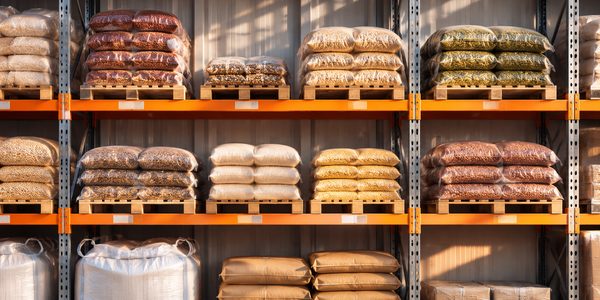
A supplier increases the price of a key ingredient by 15%. Procurement finds a cheaper alternative. Finance sees a saving. Problem solved?
Not necessarily. The alternative may need different blend proportions, have limited availability or be needed by another product. For producers of flavours, nutritional premixes, seasoning blends and specialty ingredients, raw material price volatility is not just a purchasing problem. It is a planning problem.
The price changed. What happens next?
One price increase can force decisions about suppliers, purchase quantities, formulation options and production schedules. The choices are connected: securing a discount through a larger order may increase holding costs, while switching materials can affect production requirements.
Why volatility creates a chain reaction
Food ingredient manufacturers must balance changing material prices with quality specifications, variable supply and customer demand. A decision that protects the margin of one product may create shortages or higher costs elsewhere.
That leads to a more useful question: What happens across the operation if we choose this sourcing option?
Three ways to manage ingredient price volatility
1. Compare sourcing scenarios, not just quotes
Evaluate supplier options alongside order quantities, lead times, inventory exposure and expected demand. A lower quote only helps if the wider economics work.
2. Use flexibility within approved formulations
Where specifications allow, blending optimization can compare eligible ingredient combinations while respecting quality and operational constraints.
3. Allocate scarce materials across products
Instead of optimizing each blend separately, evaluate where limited materials deliver the best overall result. See why the cheapest ingredient may not be the best allocation decision.


A decision that looks cheaper on paper
Consider a fictional seasoning-blend producer that uses an imported spice extract. Its main supplier raises the price, while a second supplier offers a lower-cost approved grade. The alternative appears attractive until the planning team compares the full picture: a longer lead time, a larger minimum order quantity and different permitted proportions in two finished blends.
For the first blend, the alternative reduces the material cost. For the second, the approved formulation allows only a small substitution. Buying enough to capture the supplier discount could therefore leave the manufacturer with excess stock. The right decision depends on projected demand, shelf life, formulation limits and the cost of holding inventory: not simply the quoted price per kilogram.
These are illustrative conditions, not a claim about a particular manufacturer. The lesson is practical: test a sourcing change against the production plan before calling it a saving.
What should a price-volatility scenario include?
A useful comparison makes assumptions visible. Planners should be able to review the same questions for each option:
- Commercial: purchase price, total landed cost (including freight and applicable duties), minimum order quantities and payment terms.
- Supply: lead time, confirmed availability and the risk of delayed replenishment.
- Formulation and eligibility: permitted material options, composition limits, customer specifications, and applicable allergen, labeling and supplier-eligibility requirements.
- Operations: batch-size requirements, production capacity and changeover implications.
- Inventory: stock already on hand, shelf-life exposure and likely future consumption.
The best scenario is not necessarily the one with the lowest ingredient price. It is the option that best balances total cost, service, inventory exposure and sourcing risk while satisfying modeled operational constraints and business priorities.
| Scenario | What changes | Decision to test |
|---|---|---|
| Base case | Current price and lead time | Baseline total cost and feasible blends |
| Price increase | Key ingredient costs 15% more | Approved alternatives and purchase quantities |
| Supplier delay | Delivery arrives two weeks late | Inventory coverage and production priorities |
Illustrative scenarios, not ICRON customer performance data.
For broader commodity price context, see the FAO Food Price Index. It tracks international prices of major food commodity groups and is not a price index for every specialty ingredient.
How ICRON brings AI, agents and scenario planning together
Imagine that the price of a key ingredient jumps just as demand is picking up. The procurement team has three options: buy more from the current supplier, switch to an approved alternative, or adjust the timing of the next order. None of these choices can be judged on price alone.
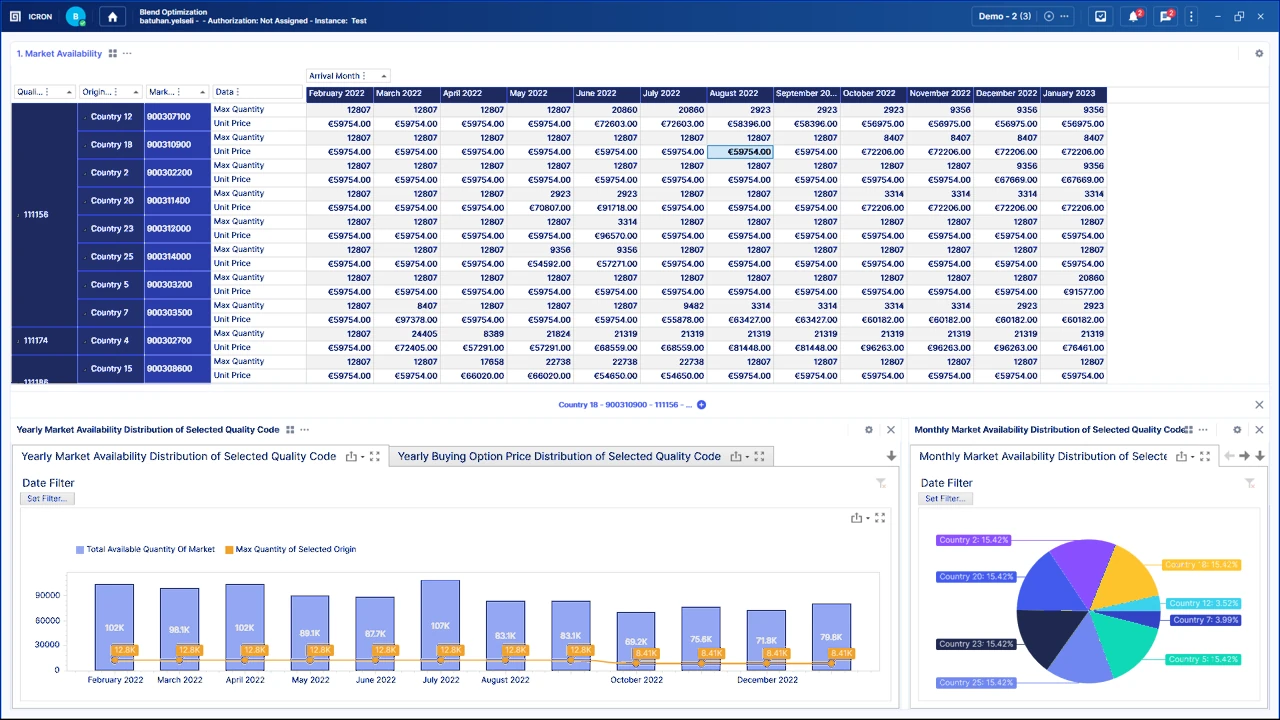
ICRON Procurement Planning and Blending Optimization helps planners look at these decisions together. Optimization models can evaluate purchasing quantities, available inventory, eligible formulations and production constraints, rather than treating each decision as a separate spreadsheet exercise.
Scenario planning: compare the trade-offs before committing
A planner could compare a base case with a higher-price scenario and a supplier-delay scenario. What happens to total material cost? Which blends remain feasible? Where could inventory run short? Scenario planning makes the consequences visible before a purchase order or production plan is finalized.
What AI and agentic AI add
Mathematical optimization generates sourcing, blending and allocation decisions that balance business objectives while satisfying modeled operational constraints. AI can help planners investigate the results and understand why one scenario performs differently. Agentic AI can support governed steps such as collecting approved inputs, requesting a scenario run and presenting the comparison for review. In ICRON’s AI-Native Decision Execution Hub, these roles complement each other rather than replacing the planner.
Where configured, agents can also respond to requests or operational updates from planners, other agents or connected enterprise systems. They can gather relevant context, modify scenario inputs, initiate or rerun optimization, compare results and execute permitted planning actions within defined authority, while escalating decisions that require approval.
When ingredient prices change, the goal is not simply to buy cheaper.
It is to understand which decision works best across procurement, blending and production.

Planning around ingredient price changes?
See how procurement, blending and allocation decisions are planned together in ICRON.
Frequently asked questions
How does raw material price volatility affect food ingredient manufacturers?
It can affect sourcing costs, formulation choices, inventory requirements and production planning. A price change in one ingredient may influence multiple products and purchasing decisions.
Can blending optimization help control ingredient costs?
Yes. Where approved formulation flexibility exists, blending optimization can identify cost-efficient material combinations that satisfy defined quality and operational constraints.